
Complete Guide to Building a High-Converting Sales Funnel
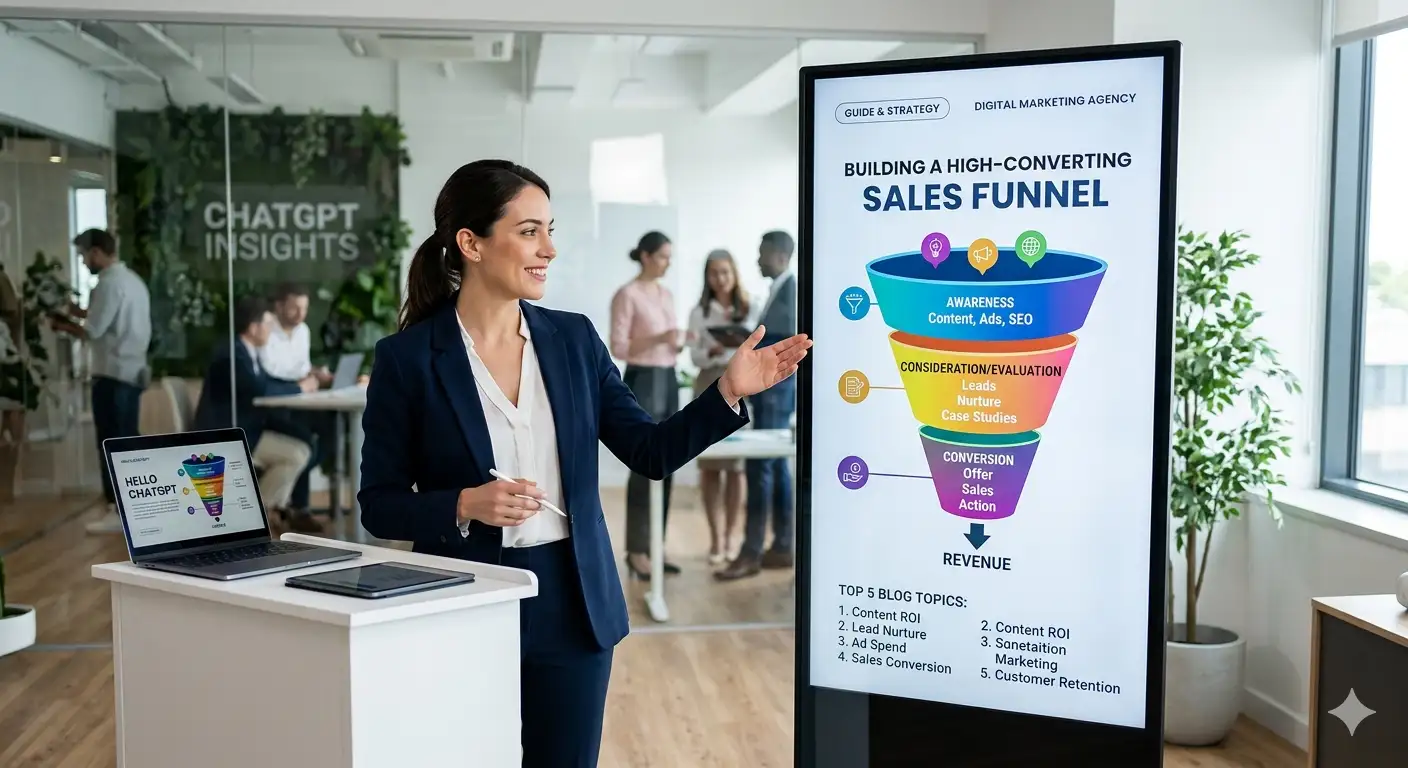
Today’s competitive digital landscape, attracting visitors to your website is no longer enough. Businesses must guide potential customers through a structured journey that builds trust, solves problems, and encourages action. This structured journey is known as a sales funnel.
A well-designed sales funnel transforms casual visitors into loyal customers by delivering the right message at the right time. Whether you are a startup, local business owner, service provider, or digital brand, understanding how to build a high-converting sales funnel can dramatically improve your marketing results.
This guide explains what a sales funnel is, why it matters, how it works, and how you can build one step-by-step with practical examples.
What is a Sales Funnel?
A sales funnel is a strategic process that moves potential customers from awareness to purchase decision through carefully planned stages.
Think of it like a guided path:
Visitors → Interested Leads → Qualified Prospects → Customers → Loyal Clients
Instead of expecting users to buy immediately, a funnel builds relationships gradually.
Businesses that use structured funnels typically experience:
• Higher conversion rates
• Better lead quality
• Lower marketing costs
• Stronger customer relationships
• Predictable revenue growth
Why Every Business Needs a Sales Funnel
Many businesses invest heavily in advertising but struggle to convert visitors into paying customers. The reason is simple — there is no structured customer journey.
A sales funnel solves this problem by:
Helping customers understand your value
Building trust before asking for commitment
Educating prospects about your solution
Removing hesitation before purchase
Creating repeat customers after conversion
Without a funnel, marketing becomes random. With a funnel, marketing becomes strategic.
Stages of a High-Converting Sales Funnel
A powerful sales funnel includes four essential stages:
- Awareness Stage
- Interest Stage
- Decision Stage
- Action Stage
Let’s explore each stage in detail.
Stage 1: Awareness – Attracting the Right Audience
This is where people discover your business for the first time. They may not be ready to buy yet. They are simply exploring solutions.
Your goal here is visibility.
Best awareness strategies include:
Search Engine Optimization (SEO)
Social media content marketing
Blog articles
Short educational videos
Instagram reels
Google Business Profile optimization
YouTube tutorials
Example:
A local skincare clinic publishes a blog titled:
“Top Causes of Acne and How to Treat Them Naturally”
People searching for acne solutions discover the clinic online. Awareness begins.
The focus at this stage is not selling — it is educating.
Stage 2: Interest – Building Trust Through Value
Once someone becomes aware of your brand, the next step is building interest.
Here you provide deeper information that helps the user understand how your service solves their problem.
Effective strategies include:
Lead magnets (free guides or checklists)
Email newsletters
Free consultations
Webinars
Case studies
Instagram carousel posts
Example:
The skincare clinic offers:
“Free Skin Type Assessment Guide”
Users download the guide by entering their email address. Now they are leads inside the funnel.
Trust begins here.
Stage 3: Decision – Showing Why You Are the Best Choice
At this stage, the potential customer is comparing options. They know they need a solution. Now they are deciding who to choose.
This is where businesses must highlight their expertise and credibility.
Best strategies include:
Customer testimonials
Before-and-after results
Portfolio samples
Service comparisons
Limited-time offers
Success stories
Example:
The clinic shares real treatment results from previous clients along with testimonials.
This removes doubts and builds confidence.
Stage 4: Action – Converting Leads into Customers
This is the most important stage of the funnel.
Here, your goal is to encourage the final step:
Booking a consultation
Making a purchase
Signing up for a service
Requesting a quote
Conversion strategies include:
Strong call-to-action buttons
Simple booking forms
Limited-time offers
Bonus services
Money-back guarantees
Example:
“Book Your Free Skin Consultation Today – Limited Slots Available”
Urgency increases conversions significantly.
Example of a Complete Sales Funnel (Realistic Scenario)
Let’s understand a practical example from a digital marketing agency perspective.
Step 1 – Awareness
Blog article:
“5 Mistakes Small Businesses Make on Instagram”
Step 2 – Interest
Free downloadable checklist:
“Instagram Growth Strategy Template”
Step 3 – Decision
Case study:
“How a local boutique increased followers by 300% in 60 days”
Step 4 – Action
Offer:
“Get a Free Social Media Audit Today”
This structured flow converts readers into clients naturally.
Types of Sales Funnels Businesses Can Use
Different businesses use different funnel models depending on their services.
Common funnel types include:
Lead generation funnels
Consultation booking funnels
Product sales funnels
Webinar funnels
Email nurturing funnels
Service-based businesses usually benefit most from consultation funnels.
E-commerce brands benefit from product funnels.
Key Elements of a High-Converting Sales Funnel
A successful funnel includes several essential components.
Landing Page
Your landing page introduces the offer clearly and encourages action.
Lead Magnet
This provides free value in exchange for contact information.
Email Follow-Up Sequence
Email builds trust gradually and keeps your brand remembered.
Social Proof
Testimonials increase credibility significantly.
Strong Call-to-Action
Clear instructions increase conversions.
Analytics Tracking
Tracking helps optimize funnel performance continuously.
How to Create a Sales Funnel Step-by-Step
Here is a practical process businesses can follow immediately.
Step 1 – Identify Your Target Audience
Understand their problems, goals, and expectations.
Example:
A fitness coach targets working professionals struggling with weight management.
Step 2 – Create Valuable Content
Educate first before selling.
Example:
Workout tips, diet strategies, lifestyle improvement content.
Step 3 – Offer a Lead Magnet
Provide something useful for free.
Example:
7-Day Beginner Fitness Plan
Step 4 – Capture Contact Information
Use landing pages or forms.
Step 5 – Build Trust Through Email Marketing
Send helpful content regularly.
Step 6 – Present Your Offer
Introduce your service naturally.
Step 7 – Optimize Based on Results
Improve weak stages continuously.
Common Sales Funnel Mistakes Businesses Should Avoid
Even good funnels fail if mistakes are ignored.
Avoid these issues:
Trying to sell immediately
Ignoring follow-up emails
Complicated landing pages
Weak call-to-action messages
No trust-building content
Poor audience targeting
Simple funnels often convert better than complex ones.
Tools That Help Build Effective Sales Funnels
Modern tools make funnel creation easier and faster.
Popular funnel tools include:
Website builders
Landing page creators
Email automation platforms
CRM software
Analytics dashboards
Even small businesses can create powerful funnels using affordable tools.
Measuring Sales Funnel Performance
Tracking performance helps improve results consistently.
Important funnel metrics include:
Website traffic
Lead conversion rate
Email open rate
Click-through rate
Consultation bookings
Customer acquisition cost
Monitoring these indicators ensures your funnel keeps improving.
Benefits of Using a Structured Sales Funnel
Businesses that implement structured funnels experience measurable advantages.
Higher lead quality
Better customer understanding
Improved marketing ROI
Consistent business growth
Stronger brand positioning
A well-designed funnel works like a digital salesperson available 24 hours a day.
Final Thoughts
A high-converting sales funnel is not just a marketing technique — it is a complete customer journey strategy. Instead of depending on random promotions, businesses can guide potential customers step-by-step toward confident decisions.
Whether you are a service provider, agency owner, consultant, or local business operator, implementing a structured funnel helps turn attention into trust and trust into revenue.
Start simple. Focus on delivering value first. Build relationships consistently. Optimize based on performance insights.
Over time, your sales funnel becomes one of the most powerful growth systems in your business.